




Frequency Files: On The Record – “Building Asheville’s Backup Heartbeat: Davyne Dial and the Making of Radio Asheville.”
By Johnny Caudle | Caudle Media | September 21, 2026
Radio Asheville is about more than music. This profile explores how management helped rebuild WPVM 103.7 FM into a home for local voices and why Radio Asheville is preparing to be there when the community needs it most.
 Most of us don’t give much thought to what happens behind the scenes when we turn on the radio. We pick a station, hear a song or a familiar voice and go about our day. But somebody has to keep that station on the air. There’s equipment to maintain, bills to pay, federal rules to follow and, at a small community station, usually a pretty small group of people doing a lot of different jobs.
At WPVM-LP 103.7 FM, better known as Radio Asheville, much of that responsibility falls to General Manager Davyne Dial. And running a radio station wasn’t exactly part of her original plan.
An Accidental Activist Finds Her Frequency
Dial describes herself as an “accidental activist.” Around 2007 and 2008, she became more involved in what was happening in local government and started livestreaming public meetings, political forums, and town halls. Livestreaming was still relatively new at the time, and she saw it as a way to give people a better look at the decisions being made in their own community. That experience opened her eyes to questionable actions happening in the community. Run-ins she had with former county manager Wanda Greene revealed the need for much more oversight in the county.
That interest in oversight and keeping people informed eventually led her to WPVM.
Saving the License Was Just the Beginning
The station was struggling and, according to Dial, was close to having its broadcast license returned to the Federal Communications Commission, the federal agency that oversees radio and television stations. She met with the board that held the license to figure out what it would take to save the station. In June 2015, the FCC approved transferring the license to the nonprofit Friends of WPVM.
Keeping the license was one thing. Rebuilding the station was another.
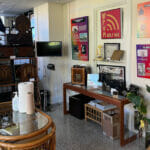
WPVM Lobby
WPVM had been through a difficult period and had largely been off the air. Dial began rebuilding its equipment while also working to reconnect the station with Asheville. These days, that means helping volunteers, handling the day-to-day business of the station and making sure the equipment is ready when people turn to 103.7 FM.
“Learning to run a community radio station has been both an honor and an experience of a lifetime,” she said. I have been exctrememly fortunate to have help at every challenge. Our tech specialist (Chris Dale)has been with the station since the first broadcast back in 2003. He recently re-located back to Asheville after over a decade of providing technical expertise from his home in Minneapolis.
A Station That Sounds Like Asheville
For Dial, the goal isn’t to make WPVM sound like a radio station that could be anywhere. She wants it to sound like Asheville.
She describes the city as a mountain community with a strong personality, where art, history, civic involvement and everyday life all mix together. She calls Asheville an “East Coast Mecca for creatives,” and WPVM tries to reflect some of that character on the air.
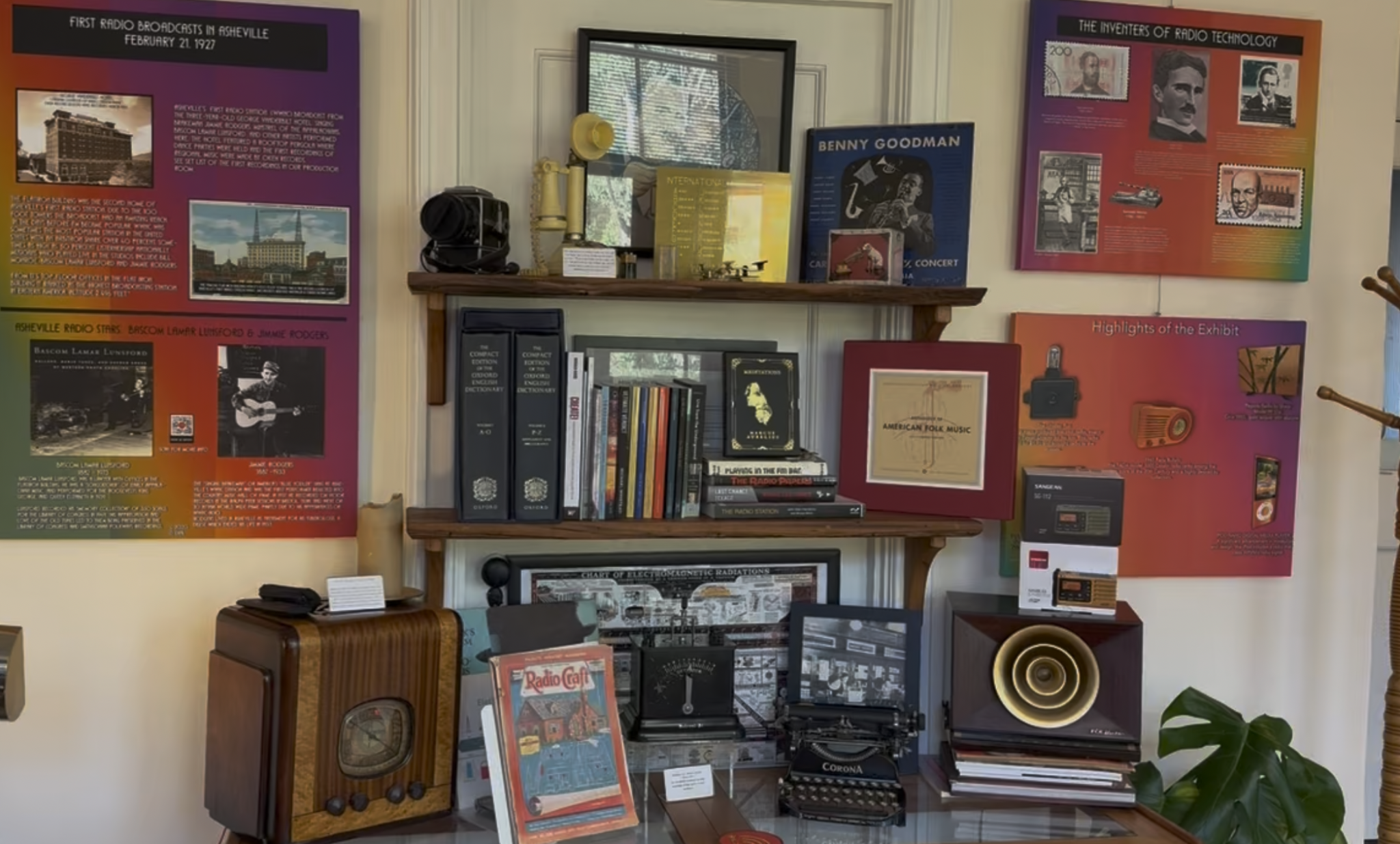
The station’s volunteer hosts bring in local musicians, historians, advocates and neighbors. Depending on when you tune in, you might hear music, a discussion about something happening around town or someone simply telling a good story. Even the downtown studio reflects that connection to radio and the community. It includes a small collection of historic equipment that gives visitors a look at how broadcasting has changed over the past century.
Local Voices, Not Algorithms – Asheville Community Radio, Built Around Local Culture
That’s also where the name Radio Asheville comes in. “Radio Asheville is both a description and a promise,” Dial said.
To her, it means that when someone tunes in, they should hear the people, concerns and sounds of Asheville and the surrounding area—not something created hundreds of miles away that could just as easily be airing in another city.
Emergency Preparedness and Public Service
 That idea of being there for the community took on a much deeper meaning after Hurricane Helene.
When the storm devastated Western North Carolina, many of the things people depend on every day suddenly weren’t dependable anymore. Electricity went out. Cell service disappeared in places. Internet access was disrupted. Some basic services remained unavailable for an extended period.
WPVM stayed on the air.
Dial remembers standing in the studio afterward and realizing just how important that was.
“One of my most memorable moments was standing in our studio after Hurricane Helene, realizing that we were still on the air while so many other systems around us were failing,” she said.
The experience left her proud of what the station had been able to do, but it also made something very clear.
“It was a wake-up call to realize how important an analog signal is in this time of digital dominance,” Dial said.
When Other Systems Failed, WPVM Stayed on the Air
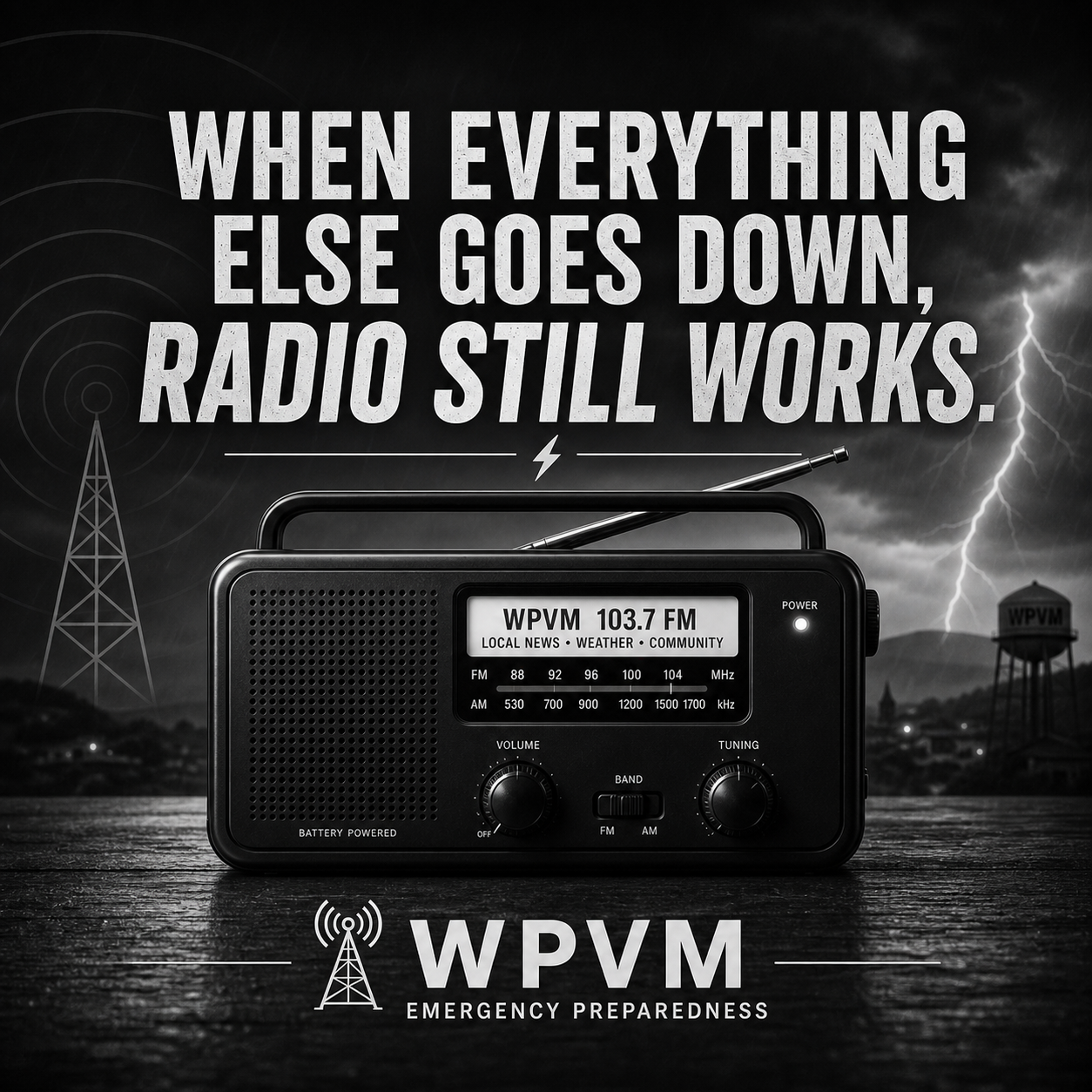
Put simply, you don’t need the internet to listen to an FM radio station. You don’t need a cellular signal, an account or a subscription either. As long as the station can keep broadcasting and you have a working radio, there’s still a way for information to reach you.
Beyond the Broadcast: Community Safety Alerts
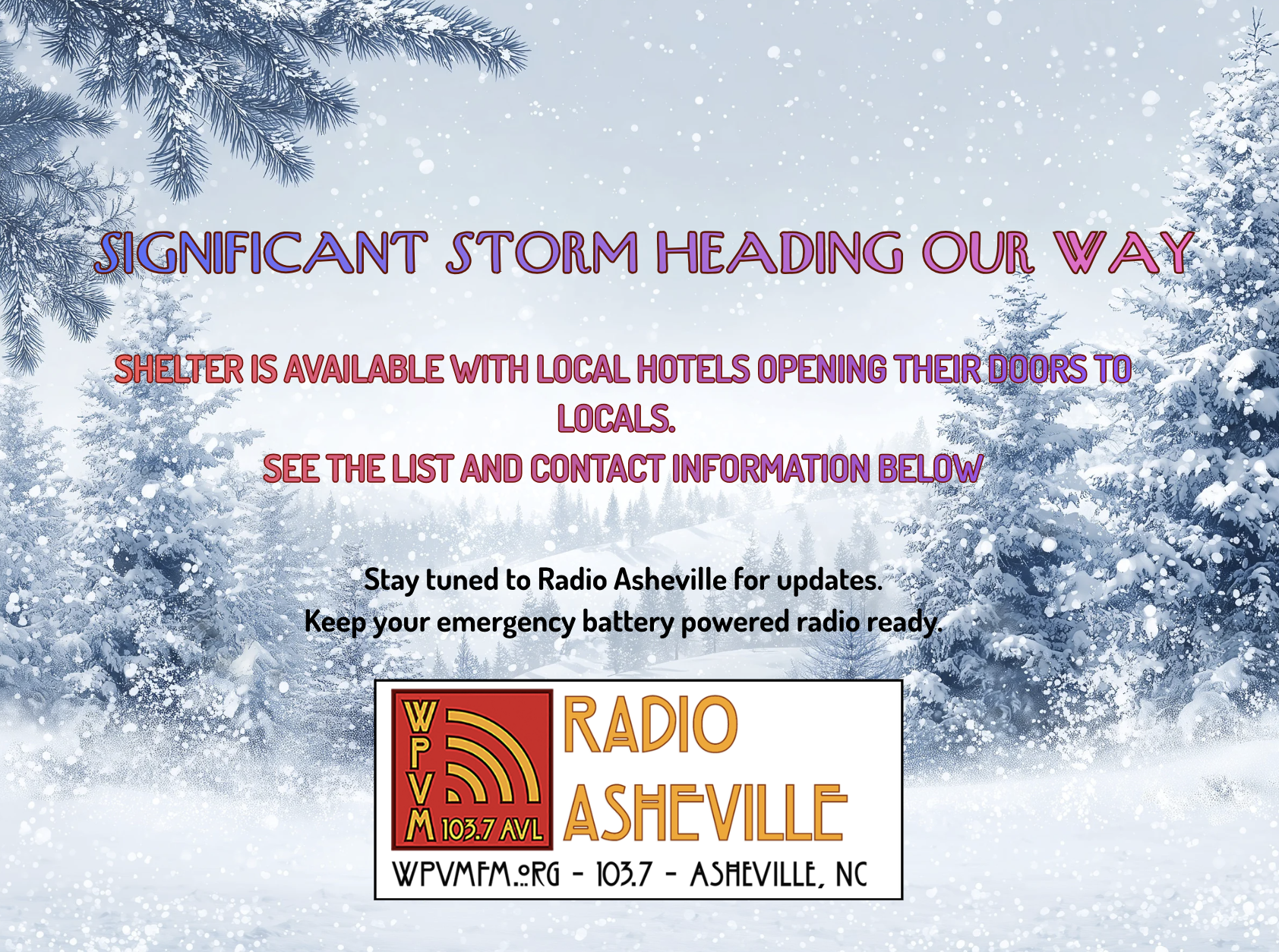
WPVM recently launched Community Safety Alerts, which residents can sign up for to receive severe weather information, road and utility updates and recovery information through text messaging or Signal. The station says some newer phones may also be able to receive messages through satellite connections when cell towers aren’t available.
The idea isn’t to replace official emergency alerts or emergency management agencies. It’s to have another way of reaching people if one of the systems they normally rely on isn’t working.
“We didn’t want to just be a station people turn to after the fact to hear what happened,” Dial said. “We wanted to build something that keeps working when everything else stops.”
And for all the technology involved, one of the things WPVM recommends is about as simple as it gets: keep a radio around.
The station encourages people to have a battery-powered, solar-powered or hand-crank radio at home. If the electricity is out and the phone isn’t working, that little radio could still provide a connection to the outside world.
No Wi-Fi. No cell service. No app. Just turn it on and listen.
All of this also shows how different running a radio station can be from what listeners hear coming through the speakers.
A small station doesn’t just turn on a microphone and start playing music. Somebody has to keep the transmitter—the equipment that actually sends the station’s signal into the air—working. Studio equipment has to be maintained. Volunteers need to be trained and scheduled. Money has to be raised. Records have to be kept. And because radio stations use the public airwaves, WPVM has federal rules it has to follow.
“Behind every broadcast is a web of technical, legal, and human work,” Dial said.
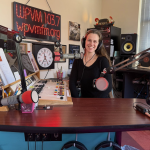 At WPVM, volunteers are a big part of that human side.
They’re not just voices filling time between songs. They live in the same community as the people listening. They may see a listener at the grocery store or run into them at a local event. They build shows around music, issues and interests they genuinely care about, and they do it without being paid.
Dial calls it a “labor of love to Asheville.”
That kind of radio is very different from the increasingly personalized world of streaming and social media. Those services can learn what you like and use computer programs to keep serving you more of it. Radio is different. Everybody listening to WPVM at the same time hears the same thing, selected and presented by another person.
For Dial, there’s still something valuable about that shared experience.
“Our programmers are volunteers; they live here; they bump into listeners at the grocery store; and they shape their shows around what they believe the community actually needs, not around quarterly ratings,” she said.
It also gives Asheville’s musicians, artists and storytellers another place to be heard. Someone might discover a local musician on WPVM whom they would never have found on their own. A story about the area’s history can be preserved. A conversation about housing, local government, the arts or another issue affecting Asheville can have room to breath instead of being squeezed into a national argument.
And when something goes wrong, those same local voices can take on a very different importance.
That’s why Dial doesn’t really separate WPVM’s everyday programming from its growing role in emergencies. Most days, Radio Asheville is simply a place for music, conversation, stories and people from the community.
But then there are days when being local means a whole lot more.
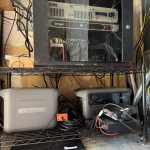
Dial has described what she wants WPVM to become as Asheville’s “backup heartbeat.” The station is working toward that with backup power, another way to broadcast if the regular studio goes down, cooperation with ham radio operators and a public alert system. At the same time, she wants WPVM to keep giving people across Western North Carolina more opportunities to tell their own stories.
It’s quite a journey for someone who never set out to run a radio station.
Radio as a lifeline
Dial arrived at WPVM when its future was uncertain. More than a decade later, she’s still thinking about how to keep the station going—but now she’s also thinking about how to make sure it’s there when Asheville is having one of its worst days. The worldwide dependence on digital has made us very vulnerable when digital goes dark. Radio is a tried-and-true lifeline.
Through all the equipment, backup plans and changing technology, her view of radio itself is actually pretty simple.
“At Radio Asheville 103.7, we treat radio as both an art form and a living technology,” Dial said. “It’s not just a way to fill airtime; it’s a medium that can inform, entertain, and unite people in ways that still feel almost magical, with no screen required.”
That’s really what Dial is trying to preserve and build on at WPVM. Most days, it’s a local station where Asheville can hear itself. And when everything else stops working, she wants to make sure there’s still a voice coming through the radio.