The Best in Asheville Comfort Food

Asheville Has Quietly Become the Restaurant Story Nobody Saw Coming
Forget the ski towns and the beach clubs — the smart money this season is heading into the Blue Ridge Mountains, to a scrappy little city that has, with almost no fanfare, turned itself into one of the most interesting places in America to eat. Asheville, population a modest 93,000, produces the kind of food scene that makes you wonder what everyone in the bigger, louder cities has been doing with their time.
The proof arrived last fall when the Michelin Guide finally deigned to notice the American South, and Asheville walked away with fifteen recognitions — a per-capita showing so disproportionate it makes New York’s celebrated dining scene look positively under-caffeinated by comparison.
Of course, nothing this good happens by accident. The backstory has real texture: Cherokee communities farming these river valleys with an instinct for seasonality centuries before “farm-to-table” was a marketing phrase; the collapse of tobacco farming in the 1990s that forced growers to reinvent themselves with heirloom grains, mushrooms, and specialty produce; and a scrappy nonprofit, the Appalachian Sustainable Agriculture Project, that had the good sense to introduce all those farmers to chefs who actually wanted what they were growing. Give it the right amount of time and neglect from the mainstream press, and you get exactly this — a pioneer stock, creative energy, equal parts rustic and razor-sharp, run by people who forage, ferment, roast, and distill because they want to, not because a consultant told them to.
Start, if you’re smart, at Neng Jr.’s — eight seats at the counter, ten more scattered around, and a chef, Silver Iocovozzi, cooking the Filipino food of his own upbringing with zero interest in playing it safe. There’s a fruit plate — heirloom tomato, mango, cantaloupe, Asian pear — dunked in a fish-sauce-and-chili dressing that hits sweet, sour, spicy, and funky in the same bite, and an egg noodle dish tangled with blue crab and blistered peppers that tastes like nothing else in town. Wash it down with a pandan daiquiri, then take the stairs up to Iocovozzi’s wine-and-karaoke bar for round two.
Then there’s The Admiral — a former dive bar that chef Austin Inselmann turned, nearly twenty years ago, into the kind of place that quietly rewrites what “Appalachian food” even means. The cocktail list alone is worth the trip: a Penicillin riff spiked with pineapple-infused Scotch that feels like the original finally got a proper vacation. The kitchen has the same magpie confidence — compressed canary melon over whipped fromage blanc with charred peppers and salsa macha, an unlikely mashup of French technique, Japanese citrus, and Mexican heat that somehow makes perfect sense on the plate, followed by housemade pasta with same-day foraged chanterelles.
Iris Rodriguez put it best when she called Asheville “a town of makers” — she’d know, given the hand-pressed arepas she’s turning out at tiny Little Chango, piled high with paprika-cumin flank steak or chicken bathed in green chili sauce.
For the ingredient romantics, there’s Cúrate, where 2015 Food & Wine Best New Chef Katie Button has built the region’s most talked-about dining room around Spanish technique and mountain-grown produce — hand-carved jamón, San Sebastián–style pintxos, and a local trout so good she refuses to do much to it beyond a charcoal grill and a little confidence.
And save room for the bread people, because Asheville takes its bakeries seriously: Mother, all white walls and natural wine, doing a chicken sandwich on olive-oil focaccia that could start an argument; and OWL Bakery, going full heirloom-grain purist with Tuxpeño corn flour and a locally milled rye loaf that tastes like it has something to prove.
The bottom line: block out more time than you think you need. This is not a one-dinner town.
Sophisticated Cuisine in a Pristine Mountain Town
“Three things make Asheville’s food scene unique. 1. It’s the most authentic farm-to-table food scene in the whole country. We’re a fairly sophisticated little city, full of great restaurants, surrounded by farms on all sides! 2. The chefs and cooks who grew up here or moved here to cook for us. James Beard Award winning Chefs like Katie Button and Meherwan Irani, local heroes like Steven Goff and Rakim Gaines, as well as the hundreds of graduates from the ABTech hospitality program, which has been named the best in the country. 3. The eaters! The local eaters as well as the thousands of visitors who come to our city, are a super important part of our food scene. They are adventurous, supportive, loyal, and proud. Our food scene is like a three-legged bar stool. If one leg was pulled off, the whole thing would tip over.” Stu Helm
Stu Helm – Asheville Food Tours


Asheville’s Sunny Point Café stands out as a top brunch destination, cherished by both residents and tourists. It’s recently been recognized as one of three eateries that embody Asheville’s essence.
This independently run, family-owned establishment specializes in Southern comfort cuisine, crafting dishes from scratch with locally sourced ingredients. The restaurant exudes a warm, cozy, and down-to-earth atmosphere, truly capturing the neighborhood vibe.
Sunny Point Café is committed to the farm-to-table philosophy, evidenced by its adjacent urban vegetable garden that supplies fresh produce for their recipes.
Popular menu items include their renowned Biscuits and Gravy, Shrimp and Grits, and a Southern Omelette featuring house-made pimento cheese, fresh tomatoes, bacon, a biscuit, and grits. Other noteworthy dishes are the Stuffed French Toast, Pecan Crusted Fried Green Tomato Sandwich, and Bourbon Pecan Pie. The restaurant’s bacon, prepared with a mysterious but delicious recipe, is particularly praised. Their biscuits are the best in Asheville.
626 Haywood Rd. (828) 252-0055

Golden Hour in Asheville, NC, is the kind of restaurant that lingers in your memory long after your meal is over—a feast for both the eyes and the palate, set in a wildly eclectic and artsy environment that is as much an experience as a dinner.
The menu is a love letter to bold flavors and Southern soul. The crab or shellfish beignets are a revelation: golden, crisp on the outside, meltingly tender within, with an oceanic richness that has guests hoping they never leave the menu. For entrées, the swordfish special is so delectable you’ll want to wipe the plate clean, while dishes like the hanger steak (best ordered medium rare) and the juicy pork chop bring out the primal joy of expertly charred meat.


Sunset Terrace offers a diverse menu featuring premium steaks, chops, and fresh seafood. Open seasonally for lunch, dinner, and drinks, this Asheville restaurant collaborates with local farmers to deliver a memorable outdoor dining experience. The venue boasts stunning views of the Blue Ridge Mountains, making it an ideal spot after golfing, sightseeing, or spa treatments.
Known for its exceptional steakhouse and seafood offerings, Sunset Terrace has earned the Wine Spectator Award of Excellence five times, most recently in 2023. Reservations are recommended for this must-visit Asheville dining destination.
While at the resort, spend some time in front of the massive fireplaces and stroll down the corridors to view artifacts that reflect the Arts & Crafts movement.
Lunch
Daily | 11 AM – 3 PM
Dinner
Daily | 4:30 PM – 10 PM
Reservations are recommended.
290 Macon Avenue
Asheville, North Carolina 28804

Homegrown offers a unique dining experience, blending the principles of slow food with the convenience of fast service. Their buttermilk fried chicken is the best in town.
The restaurant embraces the slow food movement’s emphasis on local ingredients, resulting in freshly prepared dishes that showcase the flavors of the region. Many of their offerings are beloved Southern classics, deeply rooted in Asheville’s culinary traditions.
Homegrown’s diverse menu, affordable pricing, and efficient service make it an ideal choice for groups with varied tastes and dietary needs. Whether you’re looking for a quick bite or a satisfying meal, you can enjoy high-quality, locally-inspired food without the long wait or hefty price tag. This approach allows diners to savor the benefits of slow food principles, even when time is of the essence.
Closed Tuesdays 828-232-4340
371 Merrimon Ave.

Tucked away in West Asheville, Potential New Boyfriend is where dessert dreams, Hi-Fi sound, and an inspired wine bar all converge. This cozy, intimate listening lounge offers a one-of-a-kind space: records spun by the owner set the perfect mood as you settle in with friends or unwind solo.
The menu shines with inventive small plates and decadent desserts—don’t miss the coconut tres leches cake, a vegan marvel of chocolate cake, coconut cream, and toasted coconut.
Every flavor is crafted to pair beautifully with the rotating selection of natural wines, aromatic vermouths, thoughtful aperitifs, and even dessert wines.

The Market Place, established in 1979, stands as a cornerstone of Asheville’s downtown dining scene and a trailblazer in the farm-to-table movement, both locally and nationally. Chef/Owner William Dissen, recognized as America’s most sustainable chef, adheres to a strict 100-mile sourcing policy for food and artisan products, ensuring unparalleled quality and freshness.
The restaurant’s menu is a dynamic reflection of local harvests, changing frequently to showcase the best available ingredients from nearby growers and farmers. Diners can explore a variety of small and large plates, allowing for a customizable dining experience.
This unwavering dedication to local sourcing, sustainability, and culinary excellence has established The Market Place as one of the most consistently impressive dining destinations in the greater Asheville area.
828-252-4162
20 Wall St. in downtown Avl.
Once Again Asheville Tops the List of Best Food Cities on Yelp
In order to determine the top food cities, Yelp’s Data Science team looked at the places with the highest restaurant ratings from out-of-towners, among other factors. Asheville won the top spots in 2020 & 2022.
Asheville, North Carolina, nestled in the Blue Ridge Mountains, has once again claimed the top spot in Yelp’s survey of the best cities for food enthusiasts. The city’s unique culinary landscape blends Southern American flavors with Appalachian cuisine, creating a distinctive mountain-to-urban food scene.
Notable establishments include Katie Button’s Spanish restaurant Cúrate, recipient of a James Beard Award, and Chestnut, known for its handcrafted Southern American fusion dishes. The South Slope Brewing District houses Funkatorium, a sour beer taproom, and Daddy Mac’s Down Home Dive, a new barbecue joint serving family recipes.
Asheville’s food scene is distinguished by its compelling narratives. Chai Pani, an Indian street food eatery, won the James Beard Foundation Award for Outstanding Restaurant. Top Chef’s Ashleigh Shanti is set to open Good Hot Fish, while Silver Cousler is introducing the city’s first Filipinx restaurant, Neng Jr’s. Steven Goff’s journey from homeless dishwasher to acclaimed chef adds to the city’s rich culinary tapestry.
Asheville affectionately calls its food culture “Foodtopia,” emphasizing a community of culinary collaborators crafting soul-nurturing experiences. This unique blend of innovative cuisine, diverse influences, and compelling personal stories cements Asheville’s status as a premier culinary destination.
Food & Wine Article – 48 Hours in Asheville: Where to Eat and Drink
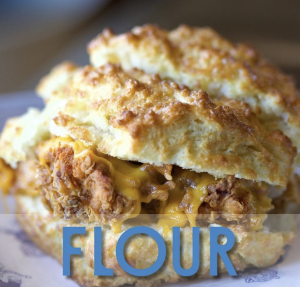 Flour — 40 Wall Street
Look up, and you’re standing where thirty-two years of Asheville dining history live in the brick. From 1993 until 2025, this address belonged to Laughing Seed Café, a pioneer of vegetarian cooking in a city that hadn’t yet built its reputation as a food town. When Laughing Seed closed, the storefront could have gone quiet like too many of its Wall Street neighbors after Helene. Instead, it rose again — literally — as Flour.
Flour began humbly, as a biscuit counter tucked into a corner of The S&W Market, where chef Gordon Gibbs and brothers Carter and Kyle James built a following on fermentation, seasonality, and a menu that changed with whatever was good that week. The move to Wall Street let them stretch out: a full breakfast and brunch menu, a sun-drenched back room, and a patio built for lingering over coffee. The biscuits — the thing that made people first fall for this place — never left the menu.
Sit here a while and you’re tasting two chapters of the same street: one restaurant’s long, quiet legacy passed to another that’s just getting started, both proof that Wall Street’s best days keep finding new ways to happen.